For dairy companies, halal certification is not a "hurdle to overcome." As long as they strictly control the three core aspects and proactively identify compliance loopholes, ...
Halal Certification Compliance Guidelines for All Categories of Dairy Products, including Pure Milk, Yogurt, and Cheese
2026-06-12
During the halal certification application process in the food industry, the vast majority of dairy companies and distributors have the same core question:
Can common dairy products such as whole milk, yogurt, cheese, butter, dairy beverages, milk powder, and dairy ice cream be processed?Halal certification?
Various misconceptions have been circulating in the industry: some merchants believe that dairy products are not eligible for halal certification, some think that flavored milk and processed cheese cannot pass the review, and others worry that there are compliance blind spots in dairy ingredients.
todayJacob's StarThis article will provide a comprehensive overview of all the rules, scope of application, core audit standards, and common pitfalls for halal certification of dairy products, helping companies obtain certification smoothly and compliantly, and opening up domestic and overseas halal markets!
I. Core Conclusion: Dairy products are perfectly eligible for halal certification!
First, let's reassure all food companies:Dairy products are a core category for halal certification and there are no restrictions on their use.
Dairy products are considered clean ingredients under Islamic law and are a mainstream essential category in the domestic and international halal food market, making them suitable for compliance declarations across all scenarios.
All categories of dairy products that can be legally declared include, but are not limited to:
·Basic fresh milk, room temperature pure milk, skim milkLow-fat pure milk
·Full fatSkim milk powder, modified milk powder, infant formula
·Plain yogurt, flavored yogurt, fermented milk
·Natural cheese, processed cheese, cheese sticks
·Whipping cream, butter, dairy products
·Dairy ice cream, dairy desserts, dairy-containing beverages, etc.
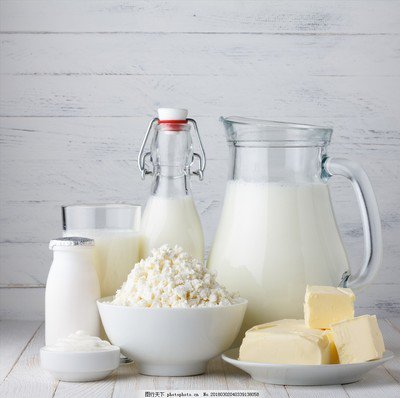
All of the above categories, as long as they comply with halal production standards, can legally apply for halal certification. The certification is recognized globally and is suitable for cross-border export scenarios such as the domestic halal market, Southeast Asia, and the Middle East.
II. Key Truth: Halal certification doesn't consider product category, only "compliance throughout the entire process".
Many companies fail to obtain certification because they fall into a misconception: they believe that as long as it is a dairy product, it will automatically pass the review.
This is the key point to emphasize:Halal certification does not restrict the types of dairy products; all auditing focuses on the entire supply chain, from raw materials and ingredients to production and warehousing. If any link violates the halal regulations, no matter how conventional the dairy product, the certification will fail immediately.
The three core audit standards for halal certification of dairy products are all key points that must be checked!
First hurdle: Ensuring compliance at the source of milk, laying a solid foundation for cleanliness.
Milk source is the first hurdle and the basic requirement for halal certification of dairy products.
Audit requirements: Milk sources must come from clean livestock and poultry permitted under Islamic law. Most mainstream healthy dairy and beef milk sources on the market meet these requirements. Furthermore, the farming process must be standardized, and the use of feed or additives containing prohibited ingredients is strictly prohibited to eliminate any risks associated with milk source traceability.
In short: pure, traceable, and compliant milk sources are a prerequisite for dairy product certification. Milk sources from reputable, large-scale farms generally meet the basic audit requirements.

The second challenge: Zero restrictions on ingredients, no loopholes in auxiliary materials.
This is the core issue that most frequently leads to dairy product certification failures! Many seemingly ordinary flavored milks, cheeses, and desserts fail because of their ingredients.
Halal certification requires that the product formula must absolutely prohibit the addition of any religiously prohibited ingredients.
List of high-risk prohibited ingredients: alcohol, non-halal gelatin, pork and pork blood derivatives, and various prohibited animal-derived ingredients.
At the same time, all hidden excipients in the formula must be fully compliant, without exception:
·Fermentation strains, probiotic strains
·Food enzymes, emulsifiers, and thickeners
·Additives such as flavorings, sweeteners, colorings, and preservatives
Many companies tend to overlook the fact that some common industrial enzyme preparations and compound flavorings may contain non-halal animal-derived ingredients, which is the biggest compliance loophole for flavored dairy products and processed cheeses.
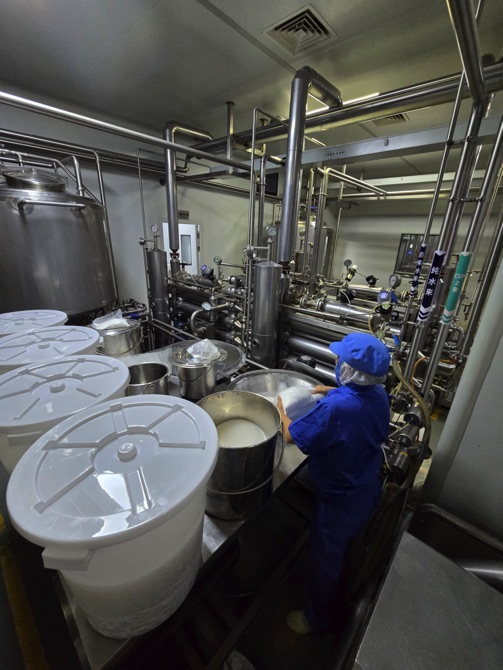
The third hurdle: preventing cross-contamination throughout the entire production process, ensuring traceability and verifiability.
Raw material compliance does not guarantee finished product compliance; the production environment and processes are the final checkpoints.
The core requirements of certification audits for the production side:
·Production equipment, pipelines, and storage tanks should be used exclusively for their designated purposes; if this is not possible, they must undergo standardized cleaning, disinfection, and isolation procedures.
·Strictly prohibit cross-contact and mixed production lines with non-halal products, prohibited raw materials, and non-clean materials.
·The entire process of production, disinfection, warehousing, and transportation is documented and traceable, allowing for full auditability.
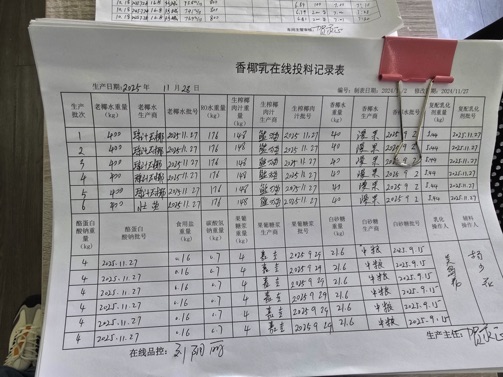
As long as isolation, cleanliness, and traceability are done well, compliance issues will generally not arise in the production process.
III. Frequently Asked Questions! These dairy products are most prone to certification failure.
Based on numerous application cases, the certification difficulty varies greatly among different dairy products. Companies must conduct targeted self-checks before applying:
✅ Low-risk, easily approved product categories
Simple formula dairy products such as pure milk, pure milk powder, original flavored fermented milk without additives, and natural light cream.
These types of products have clean ingredients and no complex additives. As long as the milk source is compliant and the production is standardized, they can generally pass certification on the first try.
⚠️ High-risk, high-frequency product categories
Flavored milk, fruit yogurt, flavored yogurt, processed cheese, cheese sticks, dairy desserts, sweetened dairy beverages, and fancy dairy ice cream.
The core reason for the failure is that the product formula is complex and the added compound enzymes, flavorings, colloids, flavor enhancers and other excipients are very easy to mix in non-halal ingredients. Many companies have their applications rejected directly because they do not carefully review the ingredients.
Important Recommendation: For high-risk product categories, be sure to thoroughly verify all ingredients, auxiliary materials, and raw material traceability reports before submitting your application, and replace any non-compliant materials in advance!
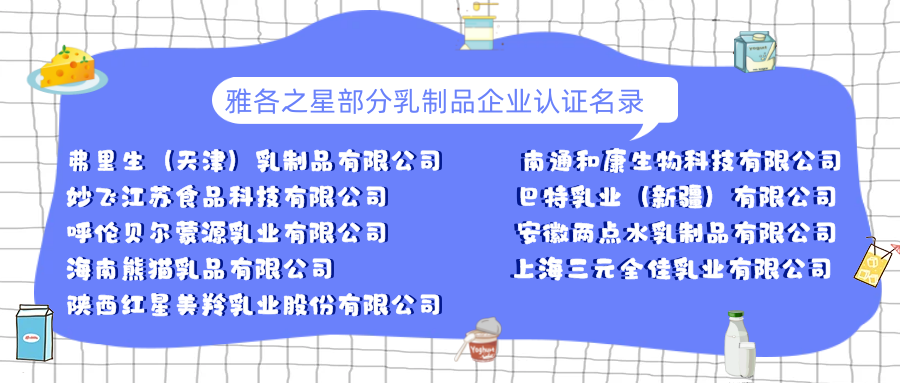
IV. Summary: Key Points of Halal Certification for Dairy Products
1. No product category restrictions: All dairy products are within the scope of Halal certification, and there are no dairy product categories that cannot be certified;
2. Review and approve the stream.Cheng: The core of the certification does not look at the product category, but only at the compliance of the entire chain of milk source, ingredients, and production;
3. Focus on excipients: Complex formula dairy products are a major area where problems are easily encountered, and hidden additives need to be carefully checked;
4. Market Applicability: After obtaining halal certification in compliance with regulations, products can legally use the halal label, adapting to the domestic halal consumer market and global cross-border export scenarios, thereby enhancing product competitiveness.
For dairy companies, halal certification is not...The "threshold problem" can be solved by strictly controlling the three core links and identifying compliance loopholes in advance. This will allow you to obtain the certificate smoothly and unlock a larger consumer market!